
As Halloween approaches, Egyptian cinema offers its own archive of ghosts, monsters, and other things that refuse to stay buried.
Before the genies were flickering across cinema screens, though, they had a strange prelude: a revolt of Cairo’s writers, painters, and filmmakers who decided, around 1938, that modernism should be dangerous. Their weapon was the uncanny, and it would take a few decades to find its way into horror.
The revolt began in print. When the Futurist Marinetti came to Cairo and flirted with Fascism at a lecture, the poet Georges Henein led a heckling that grew into Art et Liberté, a circle that published Vive L’Art Dégénéré! (“Long Live Degenerate Art!”) and stole the Nazis’ insult as a banner.
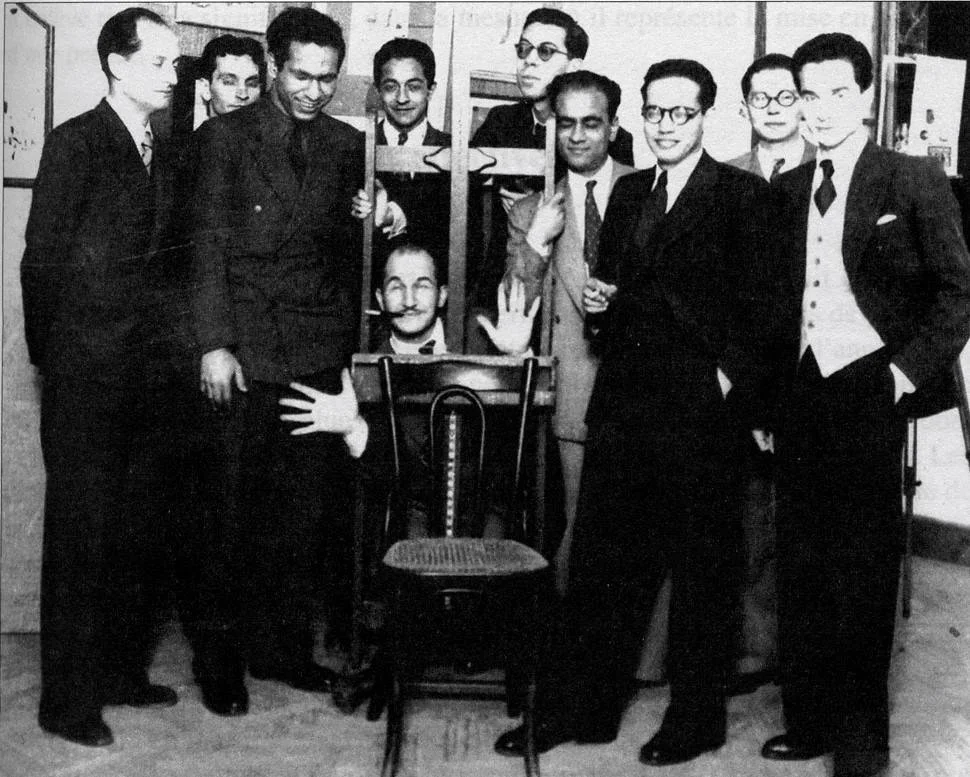
Its monthly Al Tatawwur was the first surrealist journal written entirely in Arabic, and it printed Paul Éluard in translation alongside essays on women’s sexual freedom and an anarchist slogan: “Neither god nor master.” Police shut it in 1940. Its editor Anwar Kamel went to prison and wrote Opium of the People afterwards, while Amy Nimr, another member, was writing on Cavafy for Lawrence Durrell’s wartime poetry magazine.
In paint, the mood turned darker. After her young son was killed by a landmine in the Saqqara desert in 1943, Nimr abandoned her gentle portraits for skeletons, rotting corpses and disfigured bodies, a private scream that doubled as a verdict on war and empire. Distortion, the body as evidence of something buried, dread rendered visible: these became the vocabulary of the group. By 1948, with arrests and surveillance mounting, the circle dissolved, and many members drifted into exile.
But an aesthetic chased from the gallery will find another door, and one of the founders, Kamel el-Telmissany, picked up a camera. Painted distortion became chiaroscuro and jarring angles, dream logic became hallucination and doubles, and the haunted body became the haunted mind. Egyptian cinema, which made over nine in ten Arabic-language films, then spent the next decades making monster movies of its own.
In Ambassador of Hell (1945), Yusif Wahbi swooped over Cairo as the Devil in a flowing cape. In Haram Alik (1953), the comedian Ismail Yassin ran into a Frankenstein. In Voice from the Past (1956), a boy is haunted into adulthood by his dead mother’s voice, an early sign that the best ghosts here are made of memory.
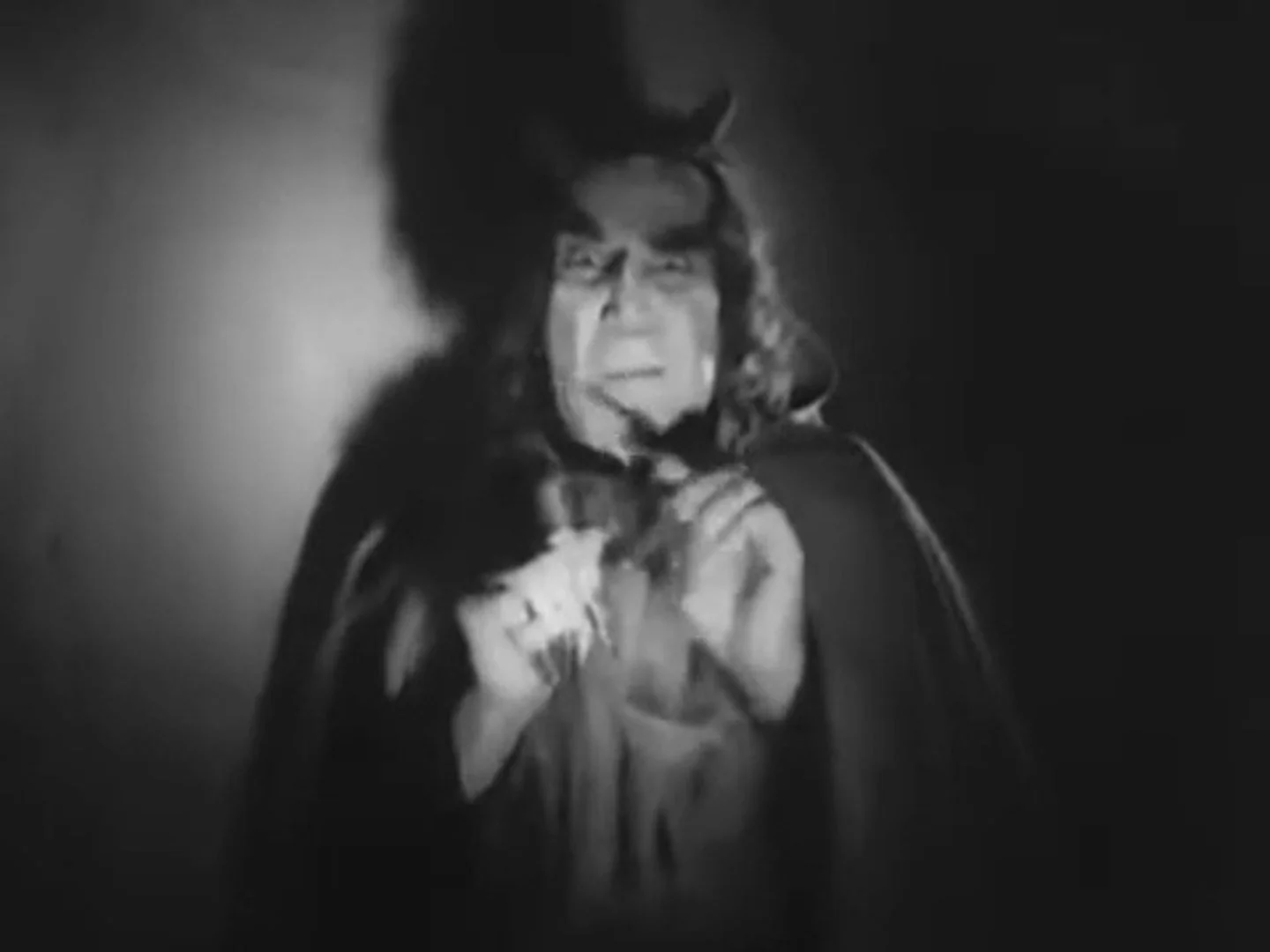
A still from Ambassador of Hell (1945)
That instinct blossomed in the 1980s, when the home video boom let a generation of young Egyptians binge global horror. Mohamed Radi’s Humans and Djinn (1985) is the one of the most known. A woman returns to Cairo after her fiancé dies in a car accident abroad, and she is pursued by a charming stranger (Adel Emam) who proves to be a djinn and forbids her to remarry.
Around the same time, Muhammad Shabl, the self-financed “monster kid” of Egyptian cinema, was making a disco-vampire riff on The Rocky Horror Picture Show, an Evil Dead-style haunted house in The Talisman (1987) where the furniture bursts into flames and a Satanist peels off his own face, and a dream-stalker thriller, Nightmare, inspired by Elm Street. His last horror film, in 1992, starred a murdered wife who climbs out of her grave, armed with a meat cleaver.
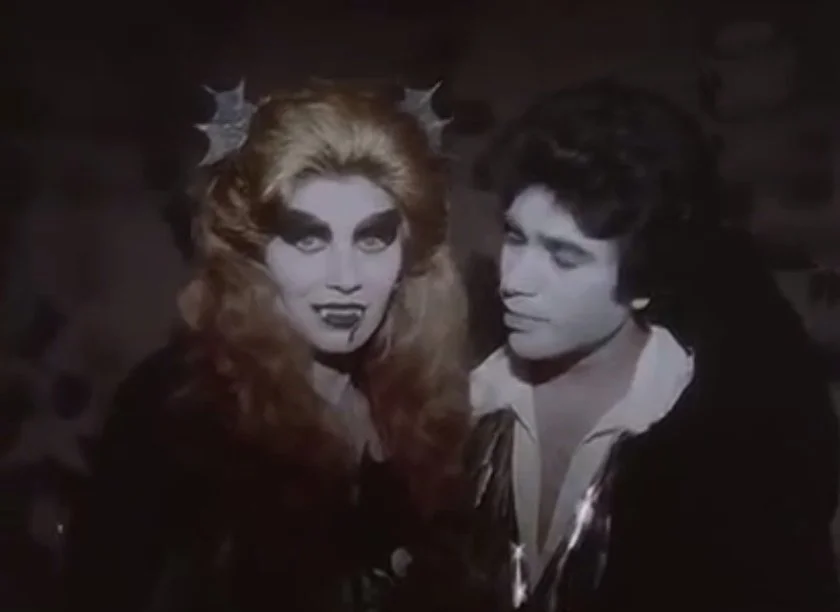
A still from Fangs (1981)
Whether the line from Art et Liberté to these films is a direct inheritance or merely a shared sensibility, they carry the same conviction: the scariest place is the mind, and looking into it is a kind of freedom.
Keep the lights low this spooky season, and perhaps let the djinn in.